

Introduction: The Story Behind Nepal’s Prayer Flags and Wheels
If you’ve visited Nepal, you’ve likely seen colorful flags fluttering on mountain trails and large cylindrical wheels spun outside temples. But do you know the story behind Nepal’s prayer flags and wheels? Both are deeply tied to Buddhism and Himalayan traditions, symbolizing peace, compassion, and spiritual energy.
These sacred objects are more than decorations — they embody centuries of culture and spirituality. Let’s explore the fascinating story and significance that makes them central to Nepalese life.
Table of Contents
The Origins of Nepal’s Prayer Flags

One key part of the story behind Nepal’s prayer flag and wheel is the prayer flag itself. Prayer flags originated from Tibetan Buddhism and spread widely across the Himalayas, especially Nepal. They are believed to date back to ancient Bon traditions, which predated Buddhism in Tibet.
The flags are used not to carry prayers to gods but to spread goodwill and compassion into the wind, blessing all beings touched by the breeze.
🔗 Related: Discovering the UNESCO World Heritage Sites of Kathmandu Valley
Symbolism of the Colors and Mantras
Another essential aspect of the story behind Nepal’s prayer flags and wheels lies in their symbolism. Each of the five colors on prayer flags represents an element:
- Blue: Sky/space
- White: Air/wind
- Red: Fire
- Green: Water
- Yellow: Earth
Together, they symbolize harmony and balance. The mantras printed on them — most commonly Om Mani Padme Hum — are prayers of compassion. When the wind blows, these prayers are believed to spread across the land.
The Story Behind Nepal’s Prayer Wheels
Equally significant in the story behind Nepal’s prayer flags and wheels are prayer wheels. Found at monasteries, stupas, and even in homes, these wheels are inscribed with mantras. Spinning the wheel clockwise releases spiritual energy, equivalent to reciting the prayer aloud.
The practice makes meditation and devotion accessible to everyone, regardless of literacy or ability to chant.
Types of Prayer Wheels in Nepal
In exploring the story behind Nepal’s prayer flags and wheels, it’s important to note there are different forms of prayer wheels:
- Handheld wheels: Small, portable, used during personal meditation.
- Fixed wheels: Large wheels placed outside monasteries and stupas for communal use.
- Water or fire-powered wheels: Turned by natural elements, believed to spread blessings continuously.
Cultural Importance in Daily Life
The cultural role of prayer flags and wheels goes beyond religion. In rural Nepal, flags are hung at homes, mountain passes, and bridges as symbols of peace and protection. Wheels are placed in temples and public spaces, allowing people to spin them as part of their daily routine.
This highlights how the story behind Nepal’s prayer flags and wheels blends spirituality with community life.
🔗 Check also: Nepal in Spring: What to Expect
Where to Experience Prayer Flags and Wheels in Nepal

If you want to witness the story behind Nepal’s prayer flags and wheels firsthand, visit:
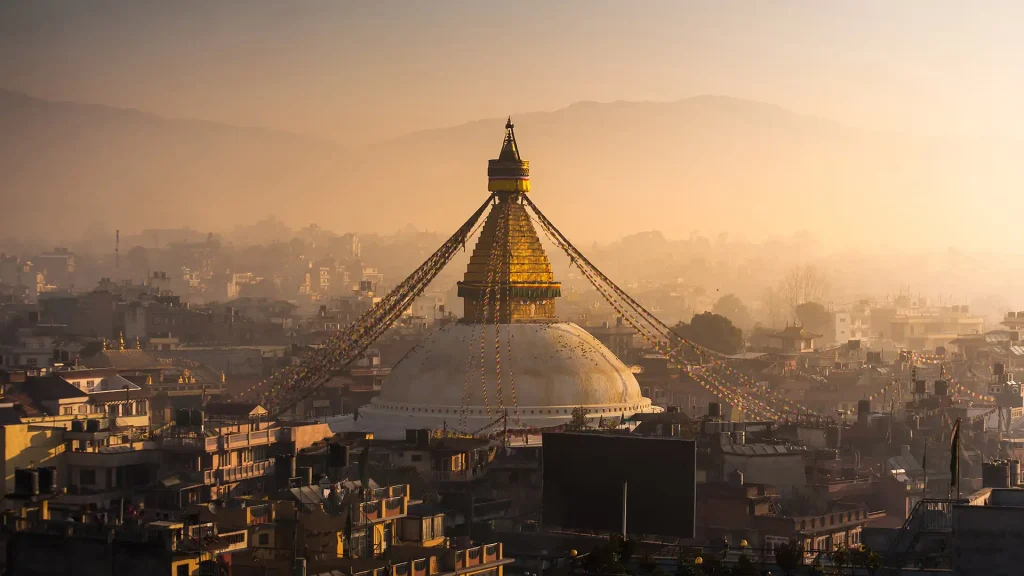
- Boudhanath Stupa (Kathmandu): Surrounded by hundreds of prayer wheels.
- Swayambhunath (Monkey Temple): Famous for fluttering prayer flags across the hilltop.
- Everest and Annapurna Trails: Prayer flags strung across high passes like Thorong La.
- Local villages: Where flags decorate homes and fields.
The Deeper Message
Ultimately, the story behind Nepal’s prayer flags and wheels is about connection. The flags spread prayers into the world, while the wheels embody inner devotion. Both remind us that spirituality can be simple, natural, and woven into everyday life.
They also symbolize unity — every spin of the wheel and every flap of the flag is a reminder of compassion, balance, and the interdependence of all beings.
Final Thoughts: The Story Behind Nepal’s Prayer Flags and Wheels
The beauty of Nepal isn’t only in its mountains but also in its culture. Understanding the story behind Nepal’s prayer flags and wheels adds depth to your journey. These sacred symbols of peace and compassion are part of what makes Nepal’s spirituality unique.
So next time you see colorful flags fluttering in the wind or hear the gentle spin of a prayer wheel, you’ll know the deeper meaning they carry.
🔗 Don’t miss: A Cultural Guide to Nepal: Traditions Every Traveler Should Know
Frequently Asked Questions (FAQs)
What do the colors on Nepal’s prayer flags mean?
In the story behind Nepal’s prayer flags and wheels, each color has a symbolic meaning: blue for sky, white for air, red for fire, green for water, and yellow for earth. Together, they represent harmony and balance in nature.
What is the purpose of prayer flags in Nepal?
According to the story behind Nepal’s prayer flags and wheels, prayer flags are not used to send prayers to gods but to spread goodwill and compassion into the wind. As the flags flutter, the printed mantras are believed to bless all beings touched by the breeze.
How are prayer wheels used in Nepal?
A key part of the story behind Nepal’s prayer flags and wheels is the prayer wheel. Spinning the wheel clockwise is believed to release the energy of the mantras inscribed inside, equivalent to reciting prayers aloud.
Where can travelers see prayer flags and wheels in Nepal?
If you want to experience the story behind Nepal’s prayer flags and wheels, visit Boudhanath Stupa, Swayambhunath (Monkey Temple), and trekking routes like Everest Base Camp or Annapurna. These places are filled with prayer flags and wheels.
What is the deeper meaning of prayer flags and wheels?
The deeper message in the story behind Nepal’s prayer flag and wheel is compassion, peace, and interconnectedness. The flags spread positive energy into the world, while the wheels symbolize personal devotion and mindfulness.